
MANILA — The Philippines has the scientific evidence and policy frameworks needed to improve lung cancer outcomes, but experts said stronger institutions, government leadership, and cross-sector collaboration are needed to translate these commitments into sustained action.
The need to move from policy to implementation was the central message at the roundtable, “Beyond the Care Continuum: Building the Institutional Capability to Deliver Equitable Lung Cancer Care,” convened by the Pharmaceutical Committee of the American Chamber of Commerce of the Philippines (AmCham Philippines).
The roundtable featured Dr. Mary Bussell, Founder and Chief Executive Officer of TriMarStrategies and lead author of the global Lung Cancer Consensus Statement, and Engr. Emer Rojas, President of the Lung Health Alliance of the Philippines (LungHAP).
In her keynote address, Bussell said the biggest challenge in healthcare is no longer identifying effective solutions but ensuring that institutions can consistently deliver them.
“Scientific progress rarely falls short because of insufficient evidence. Far more often, it falls short because institutions struggle to translate evidence into implementation,” she said.
While advances in prevention, early detection, diagnostics, precision medicine, and treatment have transformed lung cancer care, Bussell noted that lung cancer remains the world’s leading cause of cancer mortality because implementation has not kept pace with scientific progress.
She said health priorities should mark the start, rather than the end, of implementation.
“The announcement of a national priority is not the end of the policy journey. It is the beginning of the implementation journey,” she said. “The defining challenge of the twenty-first century is no longer solely discovering what works. It is building institutions capable of delivering what we already know works in a sustainable, equitable, and timely manner.”
Bussell described the global Lung Cancer Consensus Statement as more than a policy document, calling it an implementation roadmap built around five principles: prevention, early detection, equitable access to treatment, partnerships and investment, and combating stigma.
She said these principles require coordinated action across government, healthcare, education, finance, industry, and civil society.
“Scientific progress creates possibility. Institutional capability determines whether possibility becomes reality,” Bussell said.
She added that implementing the roadmap requires a whole-of-government approach and should not be left to the health sector alone.
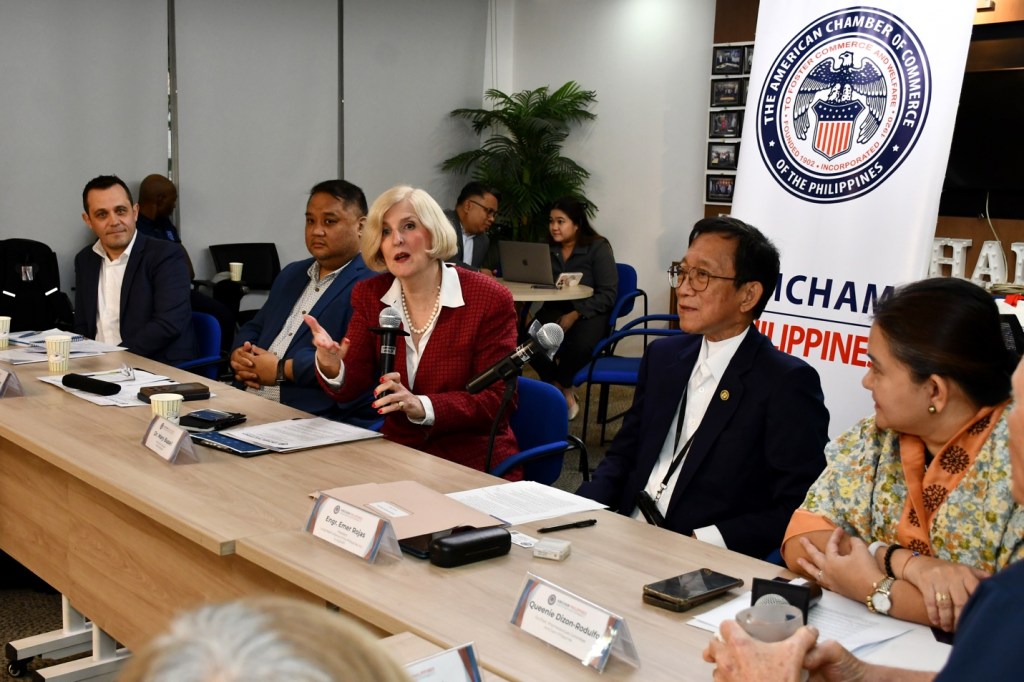
Rojas, drawing from his experience as a cancer survivor and patient advocate, underscored the need to translate existing lung cancer policies into meaningful action by expanding early detection, improving access to care, strengthening regional cancer services, and empowering patients as active partners in healthcare.
He said the Philippines already has a solid policy foundation through the Global, Asia-Pacific, and Philippine Lung Cancer Consensus Statements, but the priority now is sustained implementation.
“We have the plan in place. We have a clear framework and clear guidelines for implementation. The focus now needs to be on implementation, sustained commitment, and allocating resources for the fight ahead,” he said.
Rojas said the consensus statements inspired the creation of LungHAP in 2024 to advance lung health, improve equitable access to care, and strengthen patient participation in healthcare policy.
Since then, LungHAP has partnered with medical societies, local government units, civil society organizations, and international partners to promote awareness, advocate for earlier detection, and support policy reforms, including the Philippine Declaration on Lung Cancer Diagnostics and Treatment Access in support of the National Integrated Cancer Control Act.
Rojas also underscored the need to expand regional cancer services, strengthen public awareness, encourage public-private collaboration, and explore AI-assisted chest X-ray technology as a practical complement to low-dose CT screening, particularly in underserved communities.
Both speakers said continued scientific research remains essential to advancing lung cancer care, but stressed that scientific evidence and effective policies must be backed by institutions capable of delivering equitable, timely, and sustainable care to every Filipino.
Reflecting on the shared responsibility of governments, healthcare leaders, and stakeholders, Bussell concluded:
“History will not judge us solely by the discoveries we make. It will judge us by whether those discoveries reached the people whose lives depended upon them. That, ultimately, is the measure of leadership.”
 Life Today PH
Leave a comment