
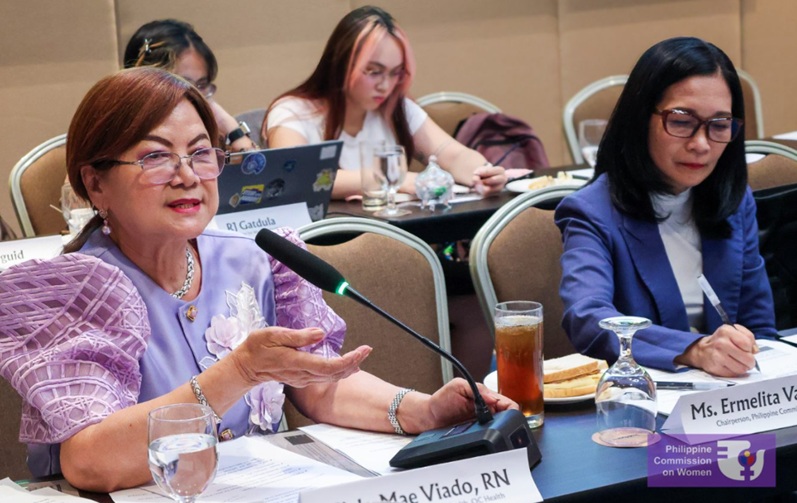
MANILA — The Philippine Commission on Women (PCW) has called for immediate upgrades to the country’s Adolescent-Friendly Health Facility (AFHF) program to ensure dignified healthcare access for young Filipinas.
Speaking at a Partnership Forum Learning Session organized by the Likhaan Center for Women’s Health and the United Nations Population Fund (UNFPA), PCW Chairperson Ermelita V. Valdeavilla warned that official certification of these health centers does not automatically translate to quality care on the ground.
While acknowledging the steady expansion of AFHFs across hundreds of local government units—offering family planning, prenatal and postnatal care, HIV/STI screening, and mental health support—Valdeavilla highlighted persistent operational failures.
Reports indicate that staff at some certified centers continue to subject young female patients to demeaning, embarrassing, and judgmental remarks. Furthermore, many remote communities remain entirely without access to an adolescent-friendly facility.
Framing the issue under the Magna Carta of Women, Valdeavilla stressed that reproductive health rights commence at a girl’s first menstrual cycle, rather than at marriage or first pregnancy.
She outlined four mandatory standards that every AFHF must fulfill:
Confidentiality: Guaranteed privacy for all patients.
Competence: Staff trained to be trauma-aware and skilled in handling youth health.
Accessibility: Physical proximity to serve girls in remote barangays.
Effective Communication: Informational outreach delivered in a language and tone adolescents understand.
Endorsing recommendations from a study by Strategic Public Health Engagement, Research and Epidemiological Standards, Inc., the PCW chief called for structural reforms to the system, including:
- Separating adolescent care units from general health services to ensure patient privacy;
- Establishing disrespectful treatment of young patients as strict grounds for clinic decertification;
- Launching targeted information drives across local barangays and schools; and
- Resolving legal contradictions between the Responsible Parenthood and Reproductive Health (RH) Law’s parental consent requirement and the AFHF program’s confidentiality standards.
Valdeavilla affirmed that the PCW will actively monitor local Gender and Development (GAD) budgets to guarantee that municipal and provincial funds are appropriately allocated to adolescent health programs.
Invoking the legacy of the pre-colonial Babaylan healers, Valdeavilla stated that “every girl who walks through the door of such a facility should leave stronger, wiser, and more protected than when she entered it.”
 Life Today PH
Leave a comment