

ILOILO CITY — Western Visayas is emerging as one of the country’s most promising regions in the fight against cervical cancer, with health leaders pointing to school-based HPV immunization as one of the most powerful tools for protecting the next generation of Filipinas and accelerating progress toward disease elimination.
Following the resumption of face-to-face classes after the pandemic, Western Visayas came out as one of the country’s strongest performers in the 2025 school-based immunization campaign.
According to DOH CHD-6, the region achieved 37.13 percent first-dose HPV vaccination coverage, surpassing the national accomplishment of 33.05 percent.
Several localities posted even stronger results. Guimaras reached 67.11 percent coverage, while Iloilo City and Aklan achieved 54.57 percent and 51.91 percent, respectively.
Although these figures remain below the goal of 90 percent vaccination rate, health leaders view the region’s performance as evidence that school-based vaccination can help expand protection against cervical cancer.
A Strengthened Resolve to Accelerate Cervical Cancer Elimination
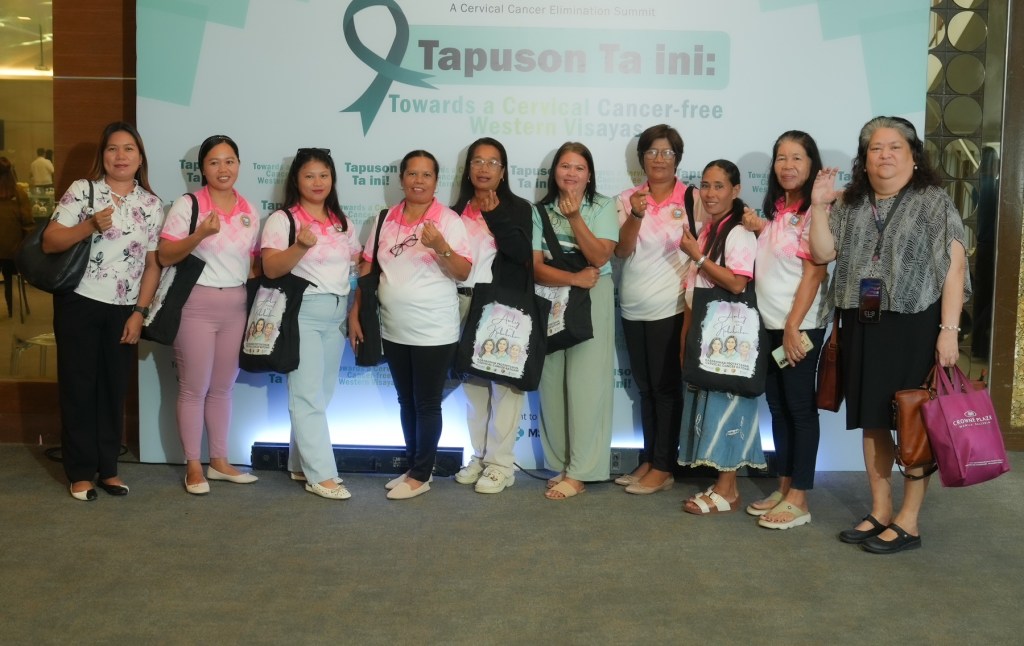
This optimism was evident during the recent Western Visayas Cervical Cancer Elimination Summit in Iloilo City, where hundreds of health workers, educators, local government officials, advocates, and development partners gathered to discuss how the region can strengthen efforts to achieve the 90-70-90 strategy for cervical cancer elimination.
For many experts, one message stood out throughout the discussions: the path to eliminating cervical cancer begins not in hospitals, but in schools and ommunities.
“We have a roadmap to eliminate cervical cancer through a coordinated public health approach,” Atienza said.
More importantly, health leaders noted that Western Visayas demonstrated the strong partnerships among health authorities, schools, local governments, and communities needed to sustain vaccination efforts and improve coverage in the years ahead.
The First Line of Defense
“Every missed girl today is a potential cervical cancer case tomorrow. But every vaccinated girl is a life protected,” Atienza said.
According to the HPV Information Centre, more than 8,000 women are diagnosed with cervical cancer in the Philippines every year, while over 4,000 die from the disease annually.
The Department of Health estimates that 12 Filipinas lose their lives to cervical cancer each day.
Cervical cancer is caused primarily by persistent infection with Human Papillomavirus (HPV), making it one of the few cancers that can be prevented through vaccination and detected early through screening.
Health experts believe cervical cancer may be eliminated as a public health problem through – 90-70-90 strategy: Vaccinating 90 percent of girls against HPV before age 15; screening 70 percent of women using high-performance tests; and ensuring that 90 percent of women diagnosed with cervical disease receive appropriate treatment and care.
“It is not only a cancer that we must fight. It is a cancer that we can prevent, stop, and ultimately end,” said Cancer Warriors Foundation CEO Carmen Auste.
Why Schools Matter
For health leaders, cervical cancer elimination begins with primary prevention.
“Because vaccination prevents HPV infection before it even occurs, we prevent the development of certain forms of cancer years or even decades later,” explained Dr. Martin Atienza, National Immunization Program Coordinator of the Department of Health Center for Health Development-Western Visayas (DOH CHD-6).
“Simply put, if screening detects disease early and treatment saves lives, vaccination prevents the disease from happening in the first place. This makes HPV vaccination the foundation of cervical cancer elimination,” he said.
The vaccine is offered free through the DOH’s National Immunization Program to girls enrolled in public schools,ages 9 to 14. Dr. Arnold Liwag, chair of the Capacity Building Committee of the SUCCESS-FAP project, explained that children in this age group receive the greatest benefit from vaccination because they have not yet been exposed to HPV.
“They will get the optimum protection of the vaccine if they are vaccinated before they become sexually active,” he said.
Because schools provide access to large numbers of eligible adolescents, experts said they have become one of the most effective platforms for delivering the vaccine and building awareness among students and parents.
Beyond the Classroom
While vaccination serves as the first line of defense, experts emphasized that screening remains equally important for adult women.
Dr. Maria Socorro Quiñon, Iloilo Provincial Health Officer, shared how screening services have been expanded to geographically isolated and disadvantaged communities, including 21 island communities and 16 GIDA barangays.
Through self-collection HPV DNA testing, house-to-house campaigns, radio information drives, church announcements, and the active participation of community health workers, more than 11,000 women out of 14,320 eligible women have already undergone screening.
Several barangays in Estancia, Lemery, Carles, and Balasan have even achieved 100 percent screening coverage among eligible women.
According to Auste, “these efforts demonstrate that communities can achieve remarkable results when preventive services are brought closer to women.”
A Shared Commitment to Protecting the Next Generation
Participants at the summit emphasized that sustaining school-based HPV immunization will require continued collaboration among the health sector, schools, local governments, parents, and communities.
While every sector has a vital role to play, speakers agreed that parents remain at the heart of successful vaccination efforts.
Their understanding, trust, and support are essential to ensuring that children receive timely protection against HPV.
“Parents remain our most important partners. Through parents-teachers association meetings or engagement activities, we can enhance vaccine confidence among parents and caregivers and encourage them to have their children receive the HPV vaccine,” Dr. Atienza said.
The Schools Division Office of Iloilo likewise pledged its continued support for vaccination campaigns and health education initiatives, while the Philippine Commission on Women underscored the importance of enabling women and girls to live healthy and productive lives through preventive healthcare.
The summit concluded with a shared commitment to strengthen multi-sectoral collaboration in advancing Western Visayas’ cervical cancer elimination efforts through primary and secondary prevention, helping protect today’s adolescents and paving the way for a future where cervical cancer is no longer a public health threat.
 Life Today PH
Leave a comment